Emit Solar | Home Solar Panels | Easy Ownership
Solar insurance is probably not what you think it is. Most people expect it to protect their house. It doesn’t. Your home insurance probably covers more than the solar policy you were about to buy.
Before anything else:
Every policy is worded differently. This describes the standard solar and home policies we see in Malaysia – yours may vary. Confirm the details with your own insurer before deciding
What most people get wrong
The common assumption: If my solar system ever damages my house – say it sparks a fire – my solar insurance will pay for it.
It won’t.
A solar policy doesn’t cover damage the system causes to your home, or to a neighbour’s property. That coverage sits elsewhere.
A solar policy protects the system itself, and the savings you lose while it’s down because it is damaged and cannot operate.
WHAT IT COVERS
- The cost of the solar system if it’s damaged.
- Lost savings while the damaged system is down.
WHAT IT DOESN’T
Damage the system causes to your home.
Damage the system causes to your neighbour’s property.
So if your worry is the system damaging your house, a solar policy is the wrong place to look.
What actually protects your house
Your home insurance does.
Most home policies treat a permanent installation – solar panels or an EV charger – as a fixture or fitting. It’s part of the building now, like a renovation.
Damage arising from it, including damage to the system itself, usually falls under that policy.
A hard-wired system becomes part of your building. Once it’s a fixture, your home policy carries it.
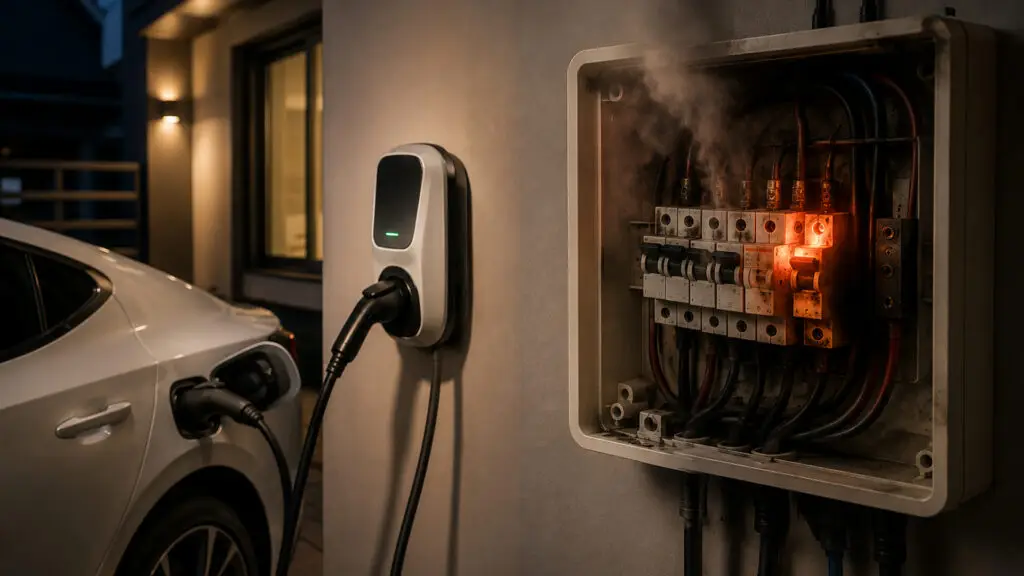
PIAM (Persatuan Insurans Am Malaysia) confirmed this after the recent EV charger fire in Alam Damai, Cheras. Standard Houseowner and Fire policies cover fire damage regardless of where the fire started – subject to the policy’s terms and exclusions – and permanently installed equipment counts as fixtures and fittings under the “buildings” section. Solar falls under the same rule. [Source: PIAM]
Most Houseowner policies also include public liability – typically around RM50,000, and extendable – which responds if a fire spreads to a neighbour’s property.
So the neighbour worry is covered too.
Just not by the solar policy.
Do you already have this cover?
Probably. If you bought your home with a housing loan, your bank almost certainly required home and fire insurance as a condition.
~45%
of Malaysian homes are tied to a housing loan, by most public estimates – so close to half already carry home and fire insurance.
[Source: PIAM]
If your home is one of them, then the coverage you worry about most is probably already there.
But don’t assume – check these three things first.
What to do first
- Talk to your home insurer. Tell them you’ve installed solar and ask how it’s treated under your policy.
- Check if the sum insured is enough. Make sure it accounts for the added cost of the system.
- Understand what your home policy does not cover. For example, your home policy may not cover accidental damage to the solar system itself, or lost savings while the system is down due to covered damage.
Either way, declare the installation to your insurer.
PIAM advises that declaring electrical upgrades keeps your sum insured accurate and gives you a clean record if you claim.
And make sure the work was done to standard – uncertified electrical work is one of the fastest ways to have a claim rejected.
When to consider solar insurance
If there are additional protections you want that are not covered under your home policy, then a separate solar policy may be worth considering as supplementary cover.
THE EXTRAS YOU GAIN
Accidental damage to the system.
Loss of income when the system is down (if you sell excess Solar Electricity).
Extreme-weather damage, subject to policy term.
Top-up value, if your home’s sum insured doesn’t cover the system.
WHAT IT STILL WON’T DO
Cover damage the system causes to your home.
Cover damage the system causes to your neighbour’s property.
That last point about what you could gain matters most. Adding solar raises your home’s rebuilding cost. If your sum insured wasn’t adjusted for it, you’re under-insured – a solar policy, or updating your home policy, closes that gap.
A note on income protection:
This usually only applies when loss of savings follows physical damage caused by fire, theft, or accidental external events, not from reduced sunlight, grid issues, a panel or inverter failing on its own. Weigh how likely external damage is before paying for it.
One more thing to consider
There’s a catch.
If a fault traces back to installer negligence or non-certified components, your home insurance may decline your claim – even when the source is the solar system or EV charger. The cover assumes the work was done properly.
How do you protect yourself?
- Use licensed installers.
- Make sure your installer follows all guidelines and regulations.
- Make sure your installer carries their own insurance – covering erection, the warranty period, and after it.
The short version
Solar insurance protects the system and your savings — not your house. The cover you were worried about most likely already lives in your home policy. Check what you’ve got, make sure it’s enough, and decide from there.
This article describes typical policies for general guidance only and is not insurance advice. Confirm all coverage with your own insurer before making a decision.
Want this worked out on your own bill?
We’ll read your actual TNB bill line by line and size a system to how your home really uses electricity. Get a straight answer from – no deposit, no commitment, we come to you.
Recent articles