Emit Solar | Home Solar Panels | Easy Ownership
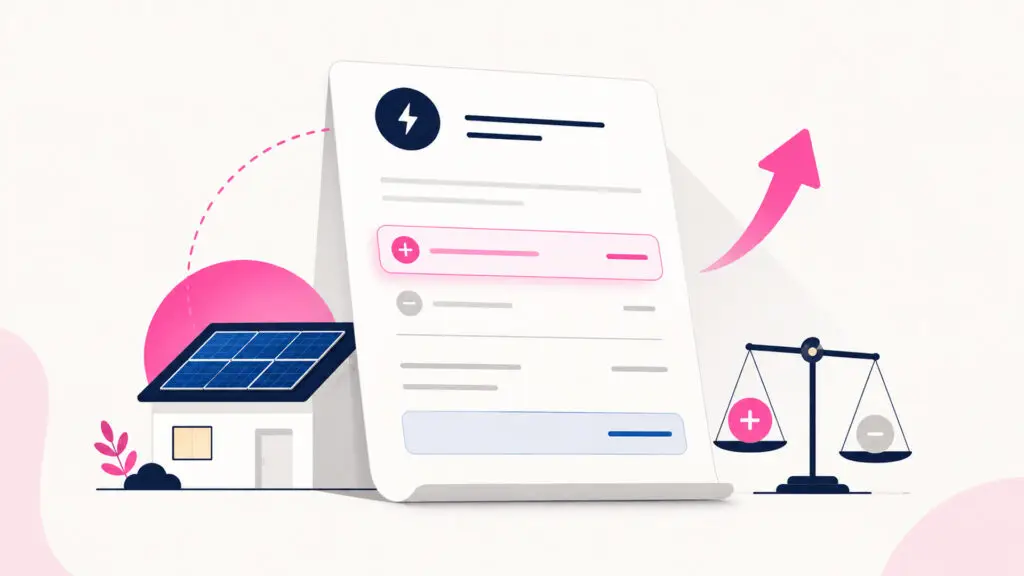
Under a democracy, everyone is meant to have an equal opportunity to participate. Solar does not work that way today. The wealthier, higher-consuming households get the strongest returns, while lower-consuming households get less value from the same sunlight.
Under the new tariff structure effective July 2025 and Solar ATAP rules, higher usage households generally see stronger returns than lower usage ones.
The reason is simple:
Solar ATAP delivers its strongest returns to households that spend the most.
They avoid higher tariff rates, use more solar directly, and achieve faster payback.
Meanwhile, lower-consumption homes may have perfectly suitable rooftops that could generate clean energy, but little financial reason to install the system.
The sunlight is equal. The economics is not. This is not just a household issue. It is a national opportunity being left on the roof.
The same 5kWp solar system. The same installation cost. Different payback timelines.
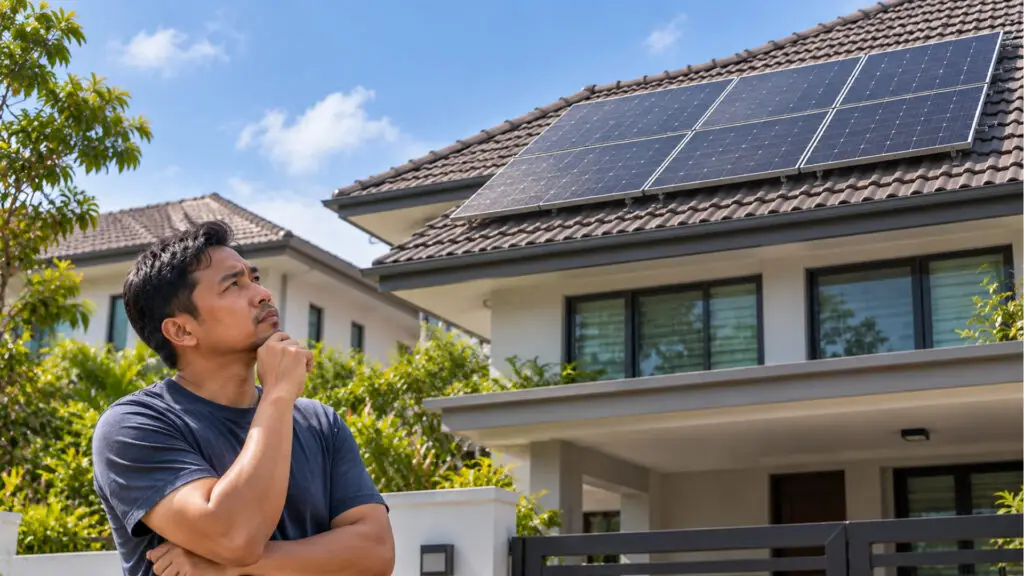
Every rooftop is an asset
A low-consumption or low-income home may not need much electricity. But its roof may still have:
- strong sunlight
- good orientation
- enough space for meaningful generation
The policy question
How do we give low-income, low-consumption households a meaningful reason to participate?
Solar ATAP Is Built Around Bill Savings
Under Solar ATAP, excess solar electricity that is exported to the grid is credited against the household’s Energy charge.
The credit:
- applies within the same billing period
- is subject to programme limits
- cannot be carried forward
- cannot create a cash payout
That makes Solar ATAP useful for reducing your own bill. It does not yet turn an underused rooftop into a meaningful income-generating asset.
For households with small incomes or small bills, solar doesn’t make sense.
What could change the equation
Malaysia does not need to abandon bill savings. It needs additional models that allow more rooftops to participate.
New programmes need to close the participation gap for low-income, low-consumption households.
That could mean:
- Enhanced export rates for lower-income households, so that exporting to the grid generates meaningful income rather than a marginal credit.
- Subsidised or zero-interest installation financing for households that cannot absorb the upfront system cost, even with fast payback.
- Aggregated community schemes that allow clusters of low-consumption homes to pool generation and negotiate better terms collectively.
- Clear long-term programme certainty – the stop-start nature of NEM phases has made investors and homeowners hesitant.
This is also an equity question
The energy transition should not include only households with:
- large homes
- high electricity bills
- spare cash for installation
Low-income, low-consumption households should also be able to benefit from the energy their rooftops can produce. That benefit could come through:
- income
- shared community value
- subsidised ownership
- participation in local energy markets
Otherwise, rooftop solar risks becoming a “rich man’s product” rather than broad national infrastructure.
The equity argument
Every rooftop in Malaysia – regardless of who lives beneath it – is potentially part of the national energy infrastructure.
Why this matters for Malaysia’s energy future
57GW of solar – Malaysia’s target by 2050.
That number requires a land area roughly the size of the entire Kuala Selangor district if met through large-scale solar farms alone. Malaysia does not have that land to spare without serious consequences.
Option A – Large-scale solar farms
Requires repurposing agricultural land and clearing forest – it’s just “not green”.
High transmission losses. Concentrated risk. Slow to permit and develop. Land Malaysia can’t afford to lose.
Option B – Distributed rooftop solar
Uses existing built footprint. Shorter transmission distance. Resilient and distributed.
Scalable across 23 million domestic users.
Malaysia needs both, because the 57GW target cannot be met without rooftop solar playing a central role. And rooftop solar cannot reach national scale if over half the housing stock is economically locked out of participation.
The geopolitical backdrop
The global race to deploy solar has already started. Countries that move fast on distributed generation will have structural energy cost advantages for decades. Malaysia’s window to act is now – not after 2027.
The Bottom Line
- Solar should not be limited to “high-income homes”.
- With the right mechanisms, lower-consumption households could become energy producers too.
- Malaysia’s energy transition will move faster when every rooftop has a reason to take part.
Related articles