Emit Solar | Home Solar Panels | Easy Ownership
Why Is My TNB Bill So Confusing?
Your electricity bill used to be simple. Then it changed – and suddenly there are seven different line items. Here’s what every single one of them means, in plain English.
Open a recent TNB bill and you’ll notice it looks different from what you remember. Where there used to be one or two numbers, there’s now a list of charges with names like AFA, EEI, KWTBB – and possibly a rebate you didn’t expect.
You’re not imagining it. The structure of Malaysian electricity bills genuinely changed, and it hasn’t been explained very well. This guide walks through every component, what it actually pays for, and who it goes to.
The short version: Your bill is made up of three types of charges – costs for generating electricity, costs for delivering it to your home, and government levies and taxes. Scroll through to understand each one.
Generating Electricity
BASE CHARGE - ALWAYS ON YOUR BILL
This is the fundamental part of your bill – paying for the electrons you actually used. But electricity doesn’t come from nowhere: it requires fuel.
The most common method is burning coal or natural gas to boil water. That steam spins a turbine, the turbine spins a generator, and electricity flows out. The fuel that makes this happen is what you’re paying for here.
Different fuels cost different amounts – and the mix of fuels used changes throughout the day as demand rises and falls. The cost of generating each kilowatt-hour shifts constantly in the background, though what you see on your bill is a blended average rate.
Curious about the actual, real-time cost of generating 1kWh? Check it out here →
REBATE : ONLY IF YOU USE LESS THAN 1000kWh/MONTH
This one appears as a negative number on your bill – meaning it reduces what you owe. If your household uses under 1,000kWh in a month, you receive a sliding rebate on your energy charges.
The scale works like this: under 200kWh gets you RM0.25 back per kWh, tapering down to RM0.05 per kWh for usage between 901–1,000kWh. Once you cross 1,000kWh, the EEI disappears entirely.
Officially, it’s framed as a reward for low-consumption households. But there’s a more technical reason too: Malaysia shifted from tiered electricity pricing (where the first 200kWh was cheaper) to a flat rate. The EEI essentially bridges the gap – if you do the maths, it makes the new bill land very close to what the old tiered bill would have been.
If your home uses under 1,000kWh a month, this is a credit. It shows as a negative number and reduces your total payable amount.
Coal, natural gas, and the Ringgit exchange rate are all constantly moving. When global fuel prices rise, it costs more to generate electricity – and when they fall, it costs less. The AFA is how this volatility is passed on to (or shared with) consumers.
Rather than changing the base energy rate every month, TNB applies a periodic adjustment. When fuel costs spike, AFA is a surcharge. When fuel prices drop, AFA becomes a rebate. It can go either way.
This charge only applies to households using more than 600kWh per month – roughly 20kWh a day, which you’ll likely cross if you regularly run air conditioning.
New to AFA? See how it works →
Delivering Electricity
INFRASTRUCTURE CHARGE · ALWAYS ON YOUR BILL
Power plants take years to plan, approve, and build. You can’t spin one up in a week just because demand spikes. So Malaysia’s grid must always maintain significantly more generation capacity than what’s actually needed on a normal day – extra headroom for heat waves, public holidays, or unexpected surges.
This means some power plants sit idle most of the time, running at low output or on standby – but still costing money to maintain, staff, and keep ready.
The capacity charge is your contribution to keeping that reserve available. Think of it like a retainer: you’re paying to ensure the lights stay on when everyone in the country turns on their air conditioning at the same time.
INFRASTRUCTURE CHARGE · ALWAYS ON YOUR BILL
Electricity generated at a power plant doesn’t magically appear at your wall socket. It travels through a vast system – high-voltage transmission lines, substations, transformers, and neighbourhood distribution cables – before it reaches your home.
Along the way, voltage is stepped up for efficient long-distance travel, then stepped back down to safe household levels. All of that infrastructure – the pylons, underground cables, transformers on street corners – needs to be built, maintained, upgraded, and eventually replaced.
Network charges cover the cost of this delivery system. It’s essentially the “last mile” charge for getting electricity from where it’s made to where you use it.
Levies & Tax
GOVERNMENT LEVY · ALWAYS ON YOUR BILL
The Kumpulan Wang Tenaga Boleh Baharu – yes, that’s what KWTBB stands for – is a small levy collected to fund Malaysia’s transition to renewable energy. It’s one of the smallest line items on your bill.
Importantly, this money does not go to TNB. TNB simply collects it on your behalf. The funds are channelled to SEDA – the Sustainable Energy Development Authority – which uses them to support projects like biogas plants, mini hydro dams, and solar energy programmes around the country.
Small on your bill, but collectively it adds up to real funding for a cleaner grid.
GOVERNMENT TAX · ONLY IF YOU USE MORE THAN 600KWH/MONTH
Electricity is classified as a service under Malaysian law, which means it’s subject to Sales and Service Tax. The current SST rate on electricity is 8%.
However – and this is the part that surprises most people – SST only applies if you use more than 600kWh in a month. If your home stays below that threshold, there is no SST on your bill at all. It’s a built-in relief measure for smaller households.
Like KWTBB, TNB acts as the collection agent here. The tax you pay goes directly to the government, not to TNB.
The Quick Cheat Sheet
Here’s every charge at a glance, and who it applies to:
ENERGY CHARGES
Cost of fuel used
Everyone pays this
EEI – ELECTRICITY EFICIENCY INCENTIVE
Rebate for low users
Under 1,000kWh/month
AFA – AUTOMATIC FUEL ADJUSTMENT
Fuel price adjustment
Over 600kWh/month
CAPACITY CHARGES
Standby power plants
Everyone pays this
NETWORK CHARGES
Grid delivery
Everyone pays this
KWTBB
Green energy fund
Everyone pays – goes to SEDA
SST
8% service tax
Over 600kWh/month – Goes to government
"The 600 kWh threshold is the one number worth remembering. Cross it, and two extra charges – AFA and SST – kick in. For context, that’s roughly 20kWh per day, or running a 1.5HP air conditioner for about 6 hours daily. "
The Bottom Line
- Your bill is more complex than it used to be, but the complexity reflects reality: generating electricity, delivering it reliably, funding the green transition, and paying taxes are all genuinely separate things. Bundling them into one opaque number was simpler, but this breakdown – once you understand it – is actually more honest.
- If your bill feels higher than expected, the first thing to check is whether you’ve crossed the 600kWh threshold. Below it, you avoid AFA and SST entirely. Above it, both kick in – and that jump can feel significant.
Want to see how much solar can help you save on your TNB bill?
Click the button below to get an estimate in less than 30 seconds.
Recent articles

Solar insurance is probably not what you think it is. Most people expect it to protect their house. It doesn’t. Your home insurance probably covers...
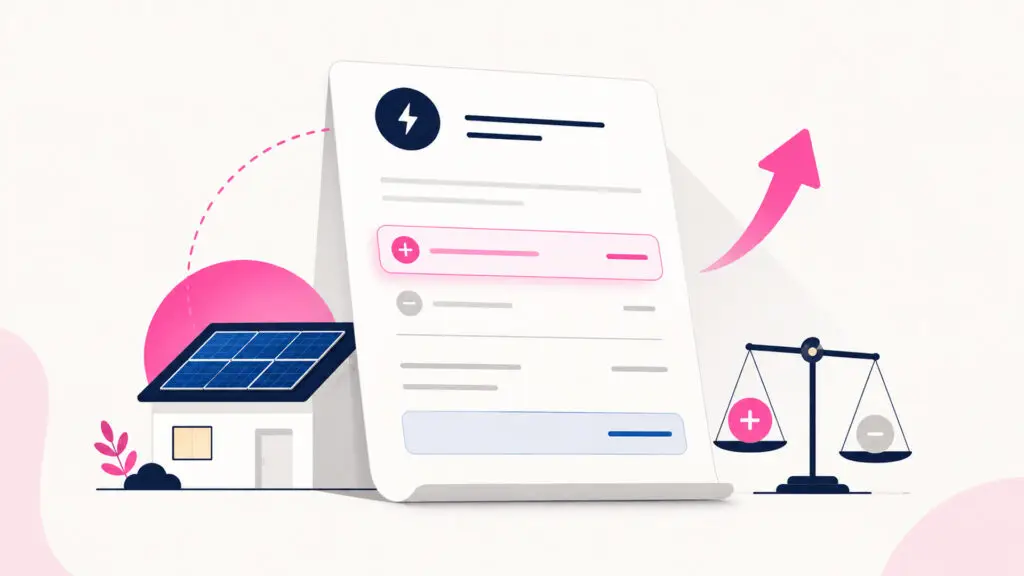
You saw an efficiency rebate — then a line that took some of it back. Here's the whole thing in plain terms, and why solar...
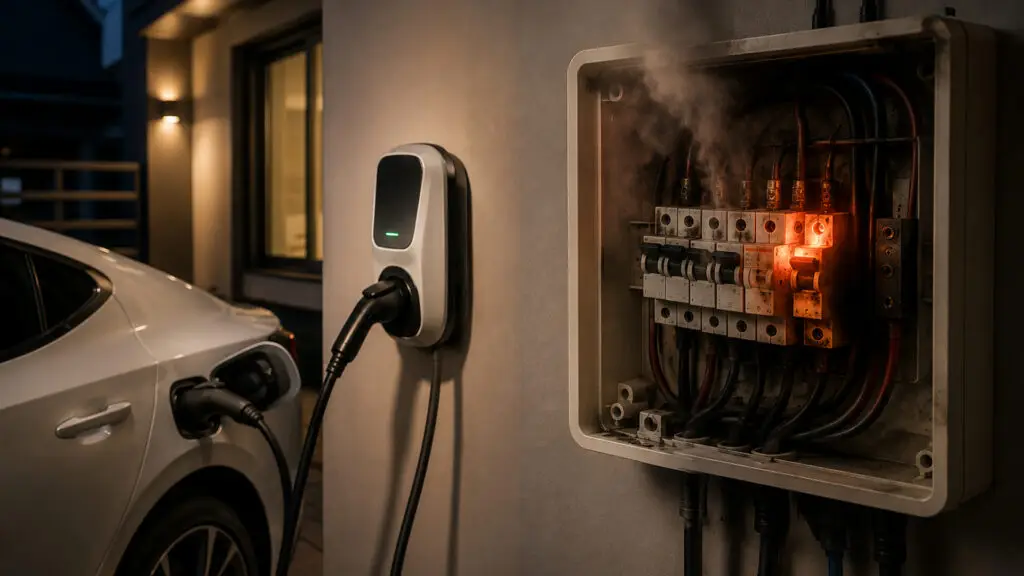
You get a free single-phase charger with your new EV, install it at home, and start charging every night. A few weeks later, your distribution...